

Irish and Irish American commentators have been warning about the decline of Irish America for well over a decade.
Proponents of the “decline” theory point out that Irish America has been shrinking in both absolute relative numbers; that powerful Irish American politicians like Ted Kennedy and Tip O’Neill are long gone; and that the 1998 Good Friday Agreement, which brought an end to the Troubles in Northern Ireland, ironically deprived Irish America of its primary animating cause.
Critics of this narrative counter that Irish American identity is changing and adapting but not vanishing, that a new wave of young Irish American politicians like Brendan Boyle and Brian Fitzpatrick are keeping Irish America politically relevant, and that the prospect of Irish reunification could reanimate diaspora interest in Ireland in the future.
Which side is right? I compiled the latest data on Irish Americans from the American Community Survey (ACS) and built an interactive guide to the current state of Irish America to find out. You can see the data for yourself here, but these are my five biggest takeaways.
Irish American numbers have declined, but are holding steady.
In 1980, 15.3% of the U.S. identified as Irish in some way. As of the latest ACS data release from 2024, that number has gone down to 9.54%.
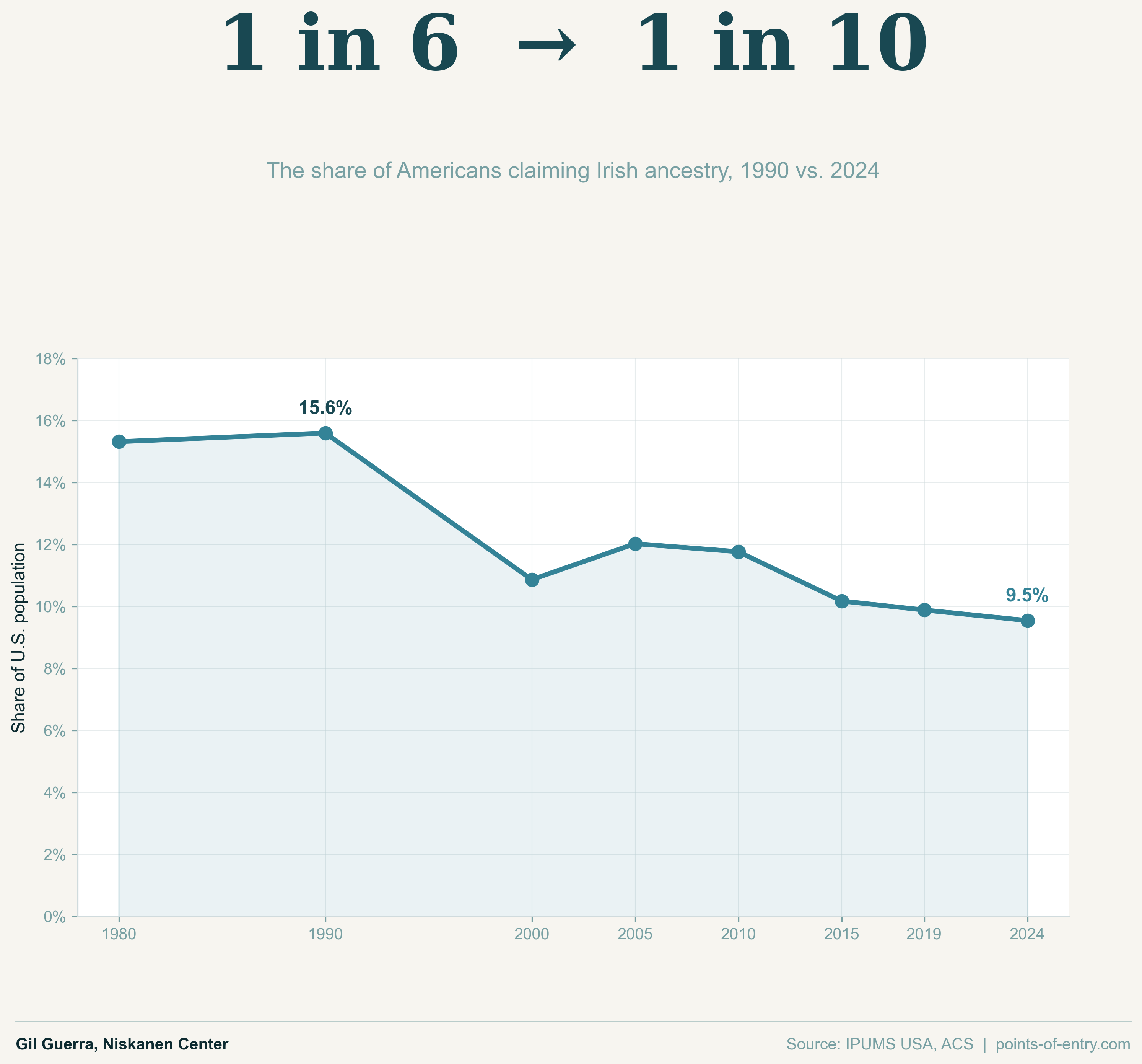
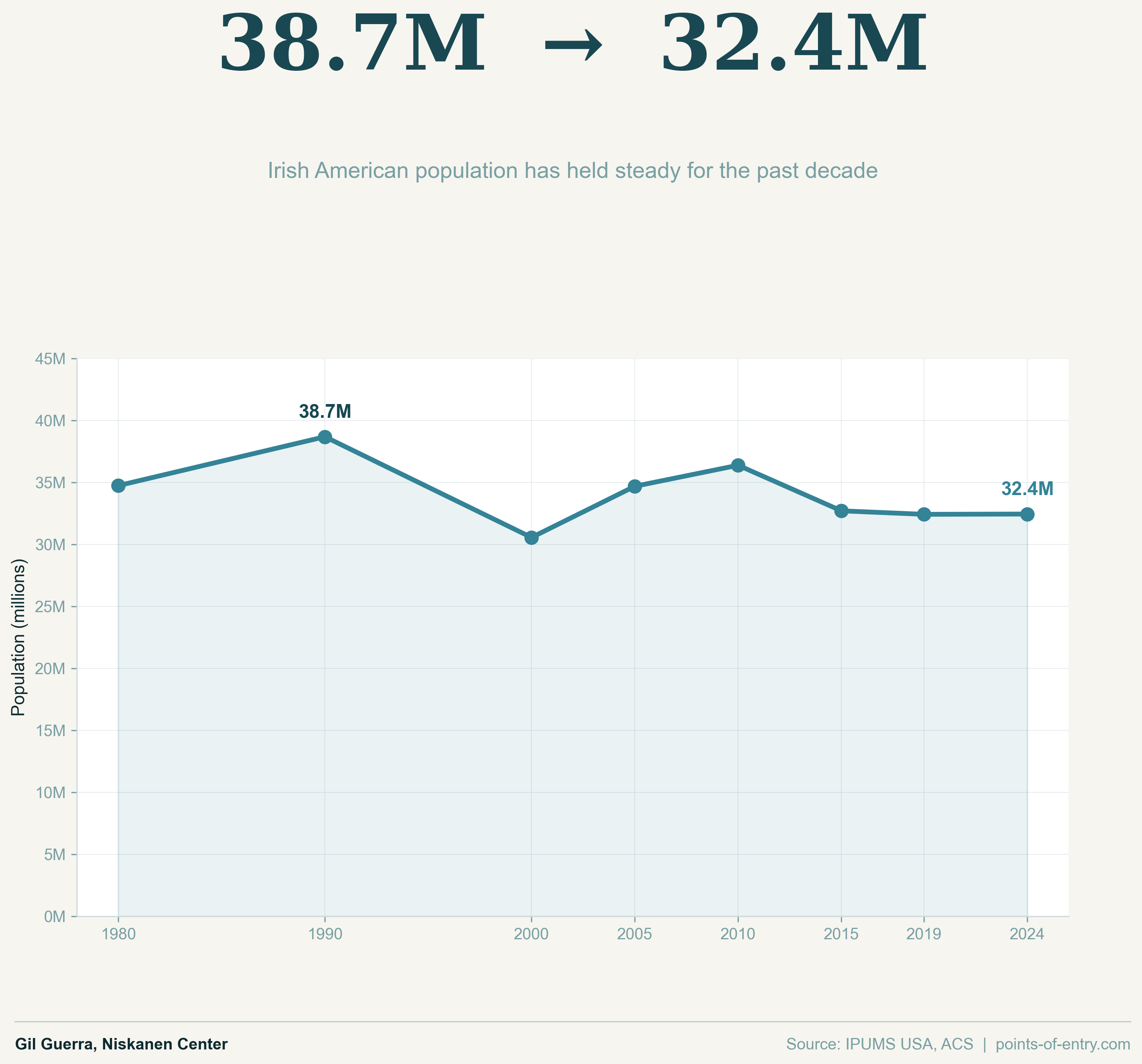
The total number of Irish Americans has held steady since 2015, at around 32 million. This identity is fragmented, however: Only 25.6% of Irish Americans identify solely as Irish. 33.8% identify as primarily Irish, while 40.6% say they are primarily something else in addition to Irish.
Irish Americans vastly outnumber recent Irish arrivals.
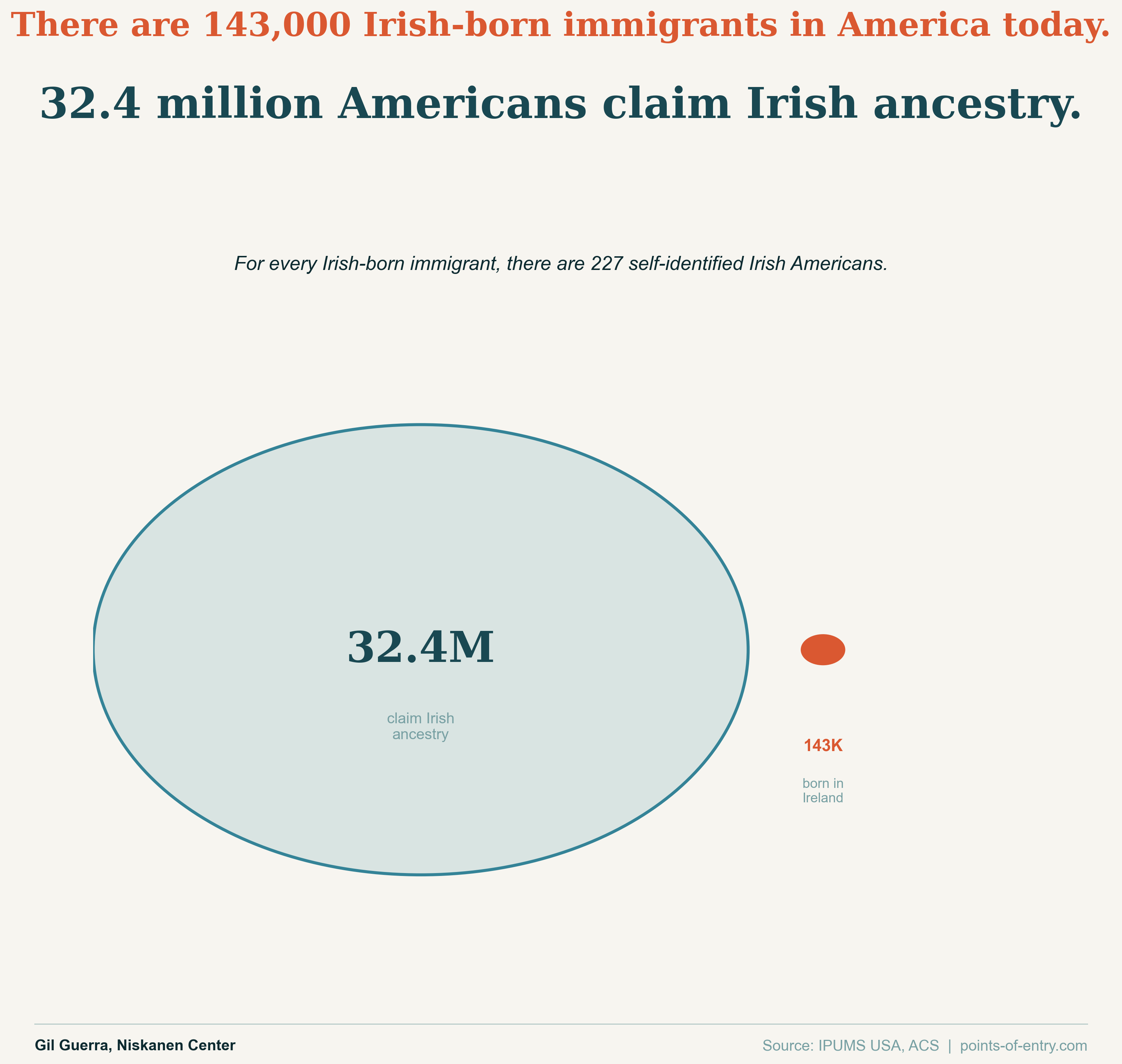
In 2024, about 143,000 U.S. residents were born in Ireland. Given that there were 32.4 million Americans who identified themselves as having Irish heritage, this means that there were roughly 227 Irish Americans for every Irish immigrant.
When I traveled Ireland in 2022 as part of my master’s program at Queen’s University Belfast, I consistently heard that young Irish people today, unlike previous generations, were more interested in destinations like Australia and Canada than the U.S. While the lack of fresh arrivals has probably helped solidify Irish American assimilation, in the long run it may also create a wider gulf between the Irish American diaspora and the Irish population.
Decline in Irish identity is due to changing norms, not immigration.
It would be easy to look at the data so far and assume that Irish American identity has declined due to increases in immigration from newer groups hailing from Latin America and Asia.
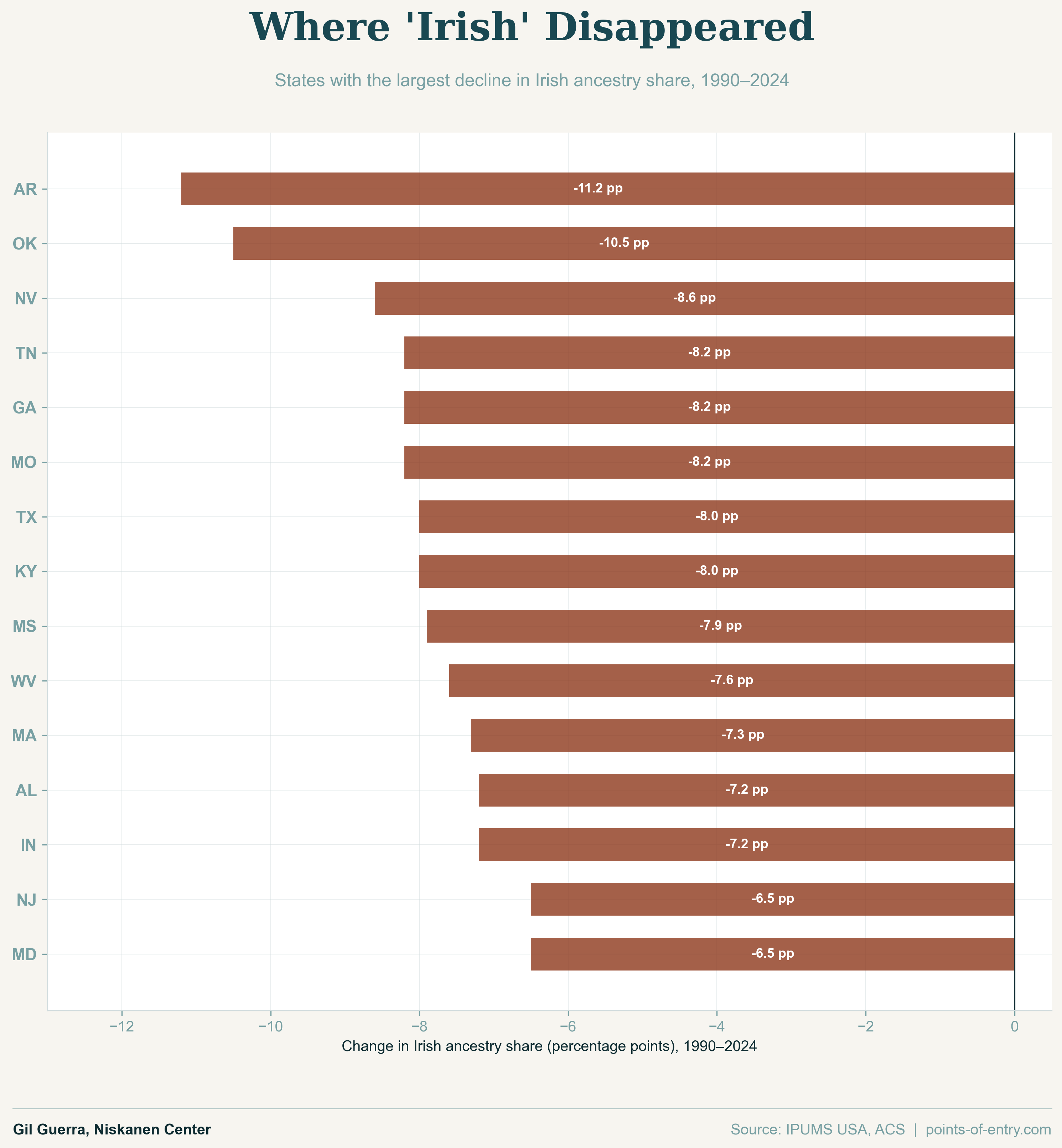
But the states with the greatest rates of decline in Irish identity have almost all been in Appalachia and the South, which have relatively low immigration rates. That indicates a shift among those states’ people of Irish descent, who now have a greater tendency to identify as “Scots-Irish” or just “American.”
In the future, we may see the opposite trend happen if more young people choose to actively identify with their Irish heritage regardless of how much descent they can actually trace back to Ireland.
There are two Irish Americas.
Among Americans who claim Irish ancestry, there are important demographic differences between those who are “solely” Irish and those who pair it with something else.
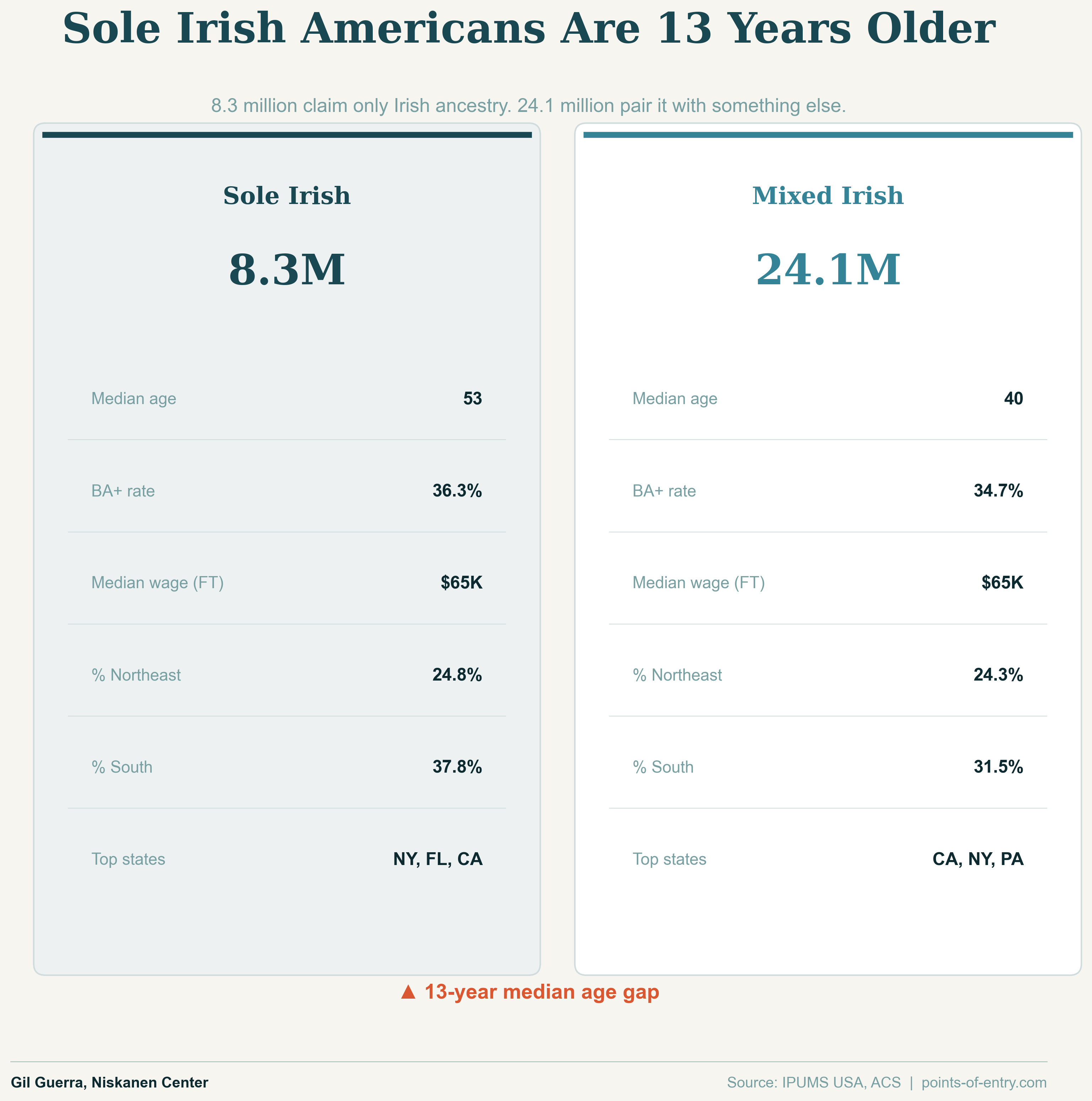
“Sole” Irish Americans are over a decade older on average and have a slightly greater concentration in the South. This population grew slightly from 2019 to 2024, from 8.1 million to 8.3 million.
Irish Americans who were primarily Irish and secondarily something else declined during the same period, from 11.5 million to 11 million.
The share of Americans who were primarily another ancestry and secondarily Irish grew from 12.8 million to 13.2 million from 2019 to 2024, and over time any significant growth in the Irish American population will happen in this sector.
Being Irish pays (unless you live in the Dakotas).
In nearly every state, Irish Americans earned more than the median state wage. The only exceptions were the Dakotas, where self-identified Irish Americans earned less.
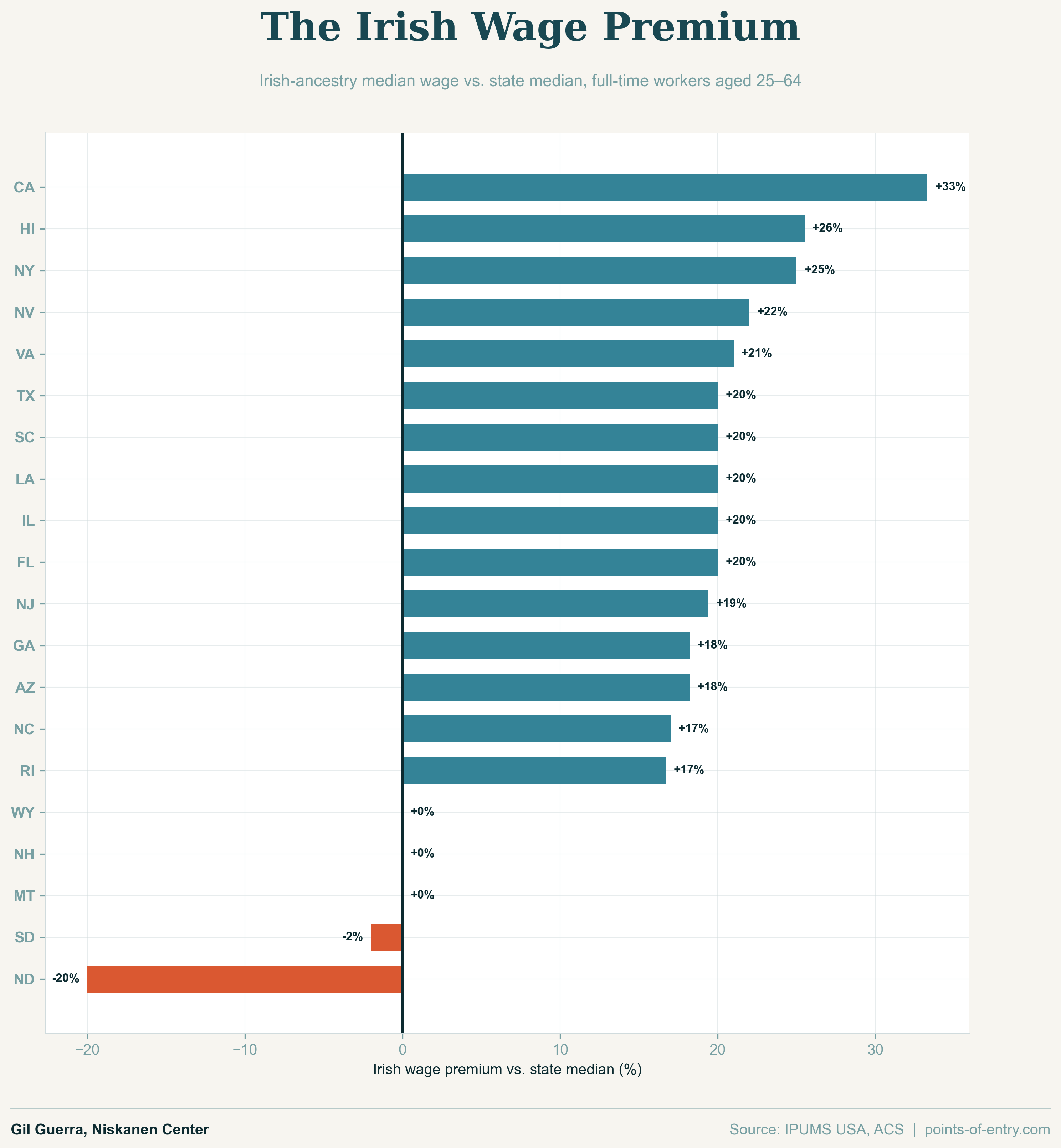
(I confess I’m not sure why that is.)
If you have any ideas about what’s causing the Dakotas effect, feel free to comment below or email me at gguerra@niskanencenter.org. If you have no ideas about what’s causing the Dakotas effect but still have questions, compliments, or complaints to offer, feel free to do the same.
Wishing you all a merry St. Patrick’s Day, whether you are part of the 32.4 million or not!